
From fat to queer & beyond
I have always said that the thing that inspires me most as a designer is bodies — the way hemlines and sleeves cut the body to create interesting proportions, the way different fabrics create unique silhouettes around the body, and the way all of these things communicate...

I have always said that the thing that inspires me most as a designer is bodies — the way hemlines and sleeves cut the body to create interesting proportions, the way different fabrics create unique silhouettes around the body, and the way all of these things communicate more about who we are than we can possibly convey through just the body. This is probably why I have such a hard time designing things like shawls or accessories — I am not sure where to tether my creativity without the home base that is the body.
When I began designing in 2019, my work felt deeply rooted in my experience as a fat person, which culminated in the knitting/sewing pattern book I published in 2021, Embody. I understood this book as a love letter to my own fat body, and by association, all fat bodies. I wrote it with the goal of empowering others to make clothes to honor their bodies, a practice that helped me see my own body as worthy, especially when the world conspires to tell me it is not.
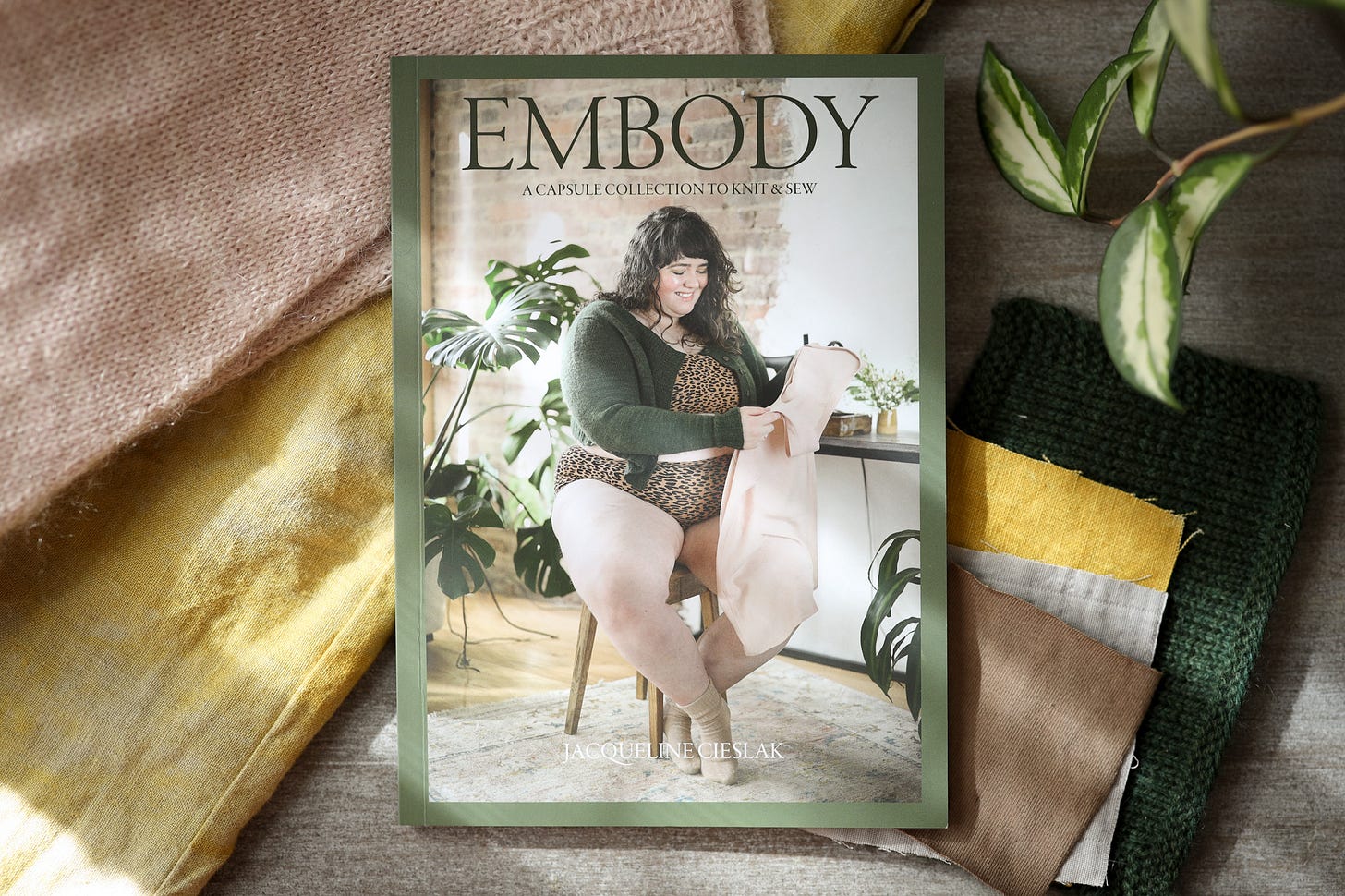
Over the last few years, as I have explored and interrogated my queerness, it has not been lost on me that I published a book titled Embody at a time when I was, in fact, much more experienced in dissociating from my body than actually being in it, listening to it, and acting on what it told me. In some ways, I have now come to understand that book and my project at the time as one of aspiration and projection — I knew there was something there, and I was digging and offering up what I found without knowing its real depth, without recognizing how much further yet I had to go.
This is not a critique of or a retreat from that earlier project. In fact, it is a recognition that I needed to do that before I could do this; I had to be fat before I could be queer. Growing up in a relatively areligious household with a very thin and very successful engineer as a mother, I was more afraid of being fat than I was of pretty much anything else in the world (including being gay). I became deeply devoted to ignoring what felt like the vulgar cues of my body — hunger, desire — and focusing instead on the value of the things I put out into the world that I believed stood apart from my body (schoolwork, success, etc.).
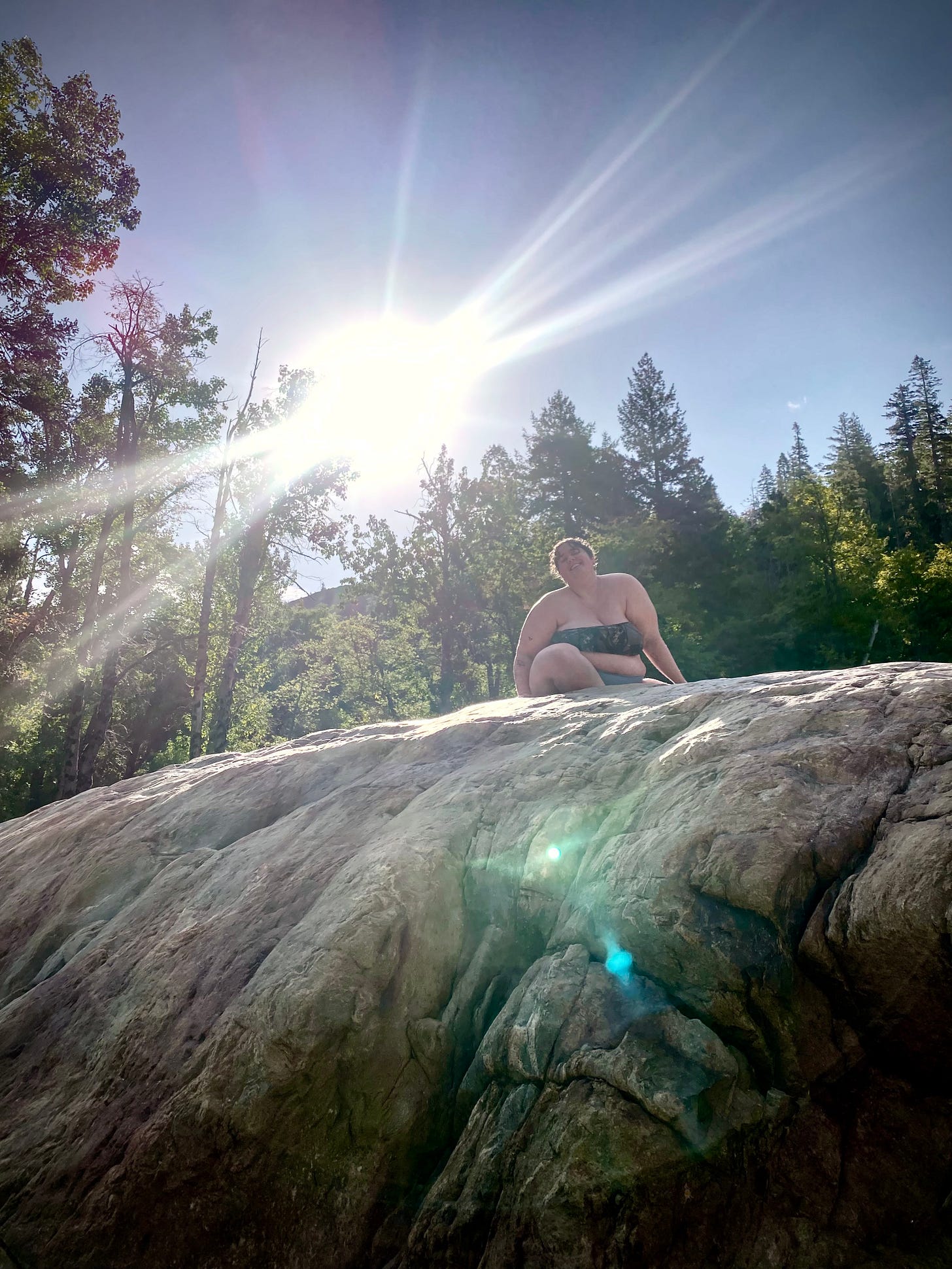
And so the work of learning to listen to my body had to come first. Being fat freed me to feel hunger, which unearthed my queerness like an explosive gift of desire, joy, grief, creativity, and connection.
Designing and making clothing when you are in a period of transition in your own style, especially when that transition is rooted in something as personal and vulnerable as your own evolving gender, is, well, really fucking hard. I have spent the last few years alternately resenting my career, feeling exposed and scared and pressured to get it right immediately, and feeling grateful, both for the freedom of self-employment and the chance to keep developing and sharing a creative practice more in line with my own self-actualization.
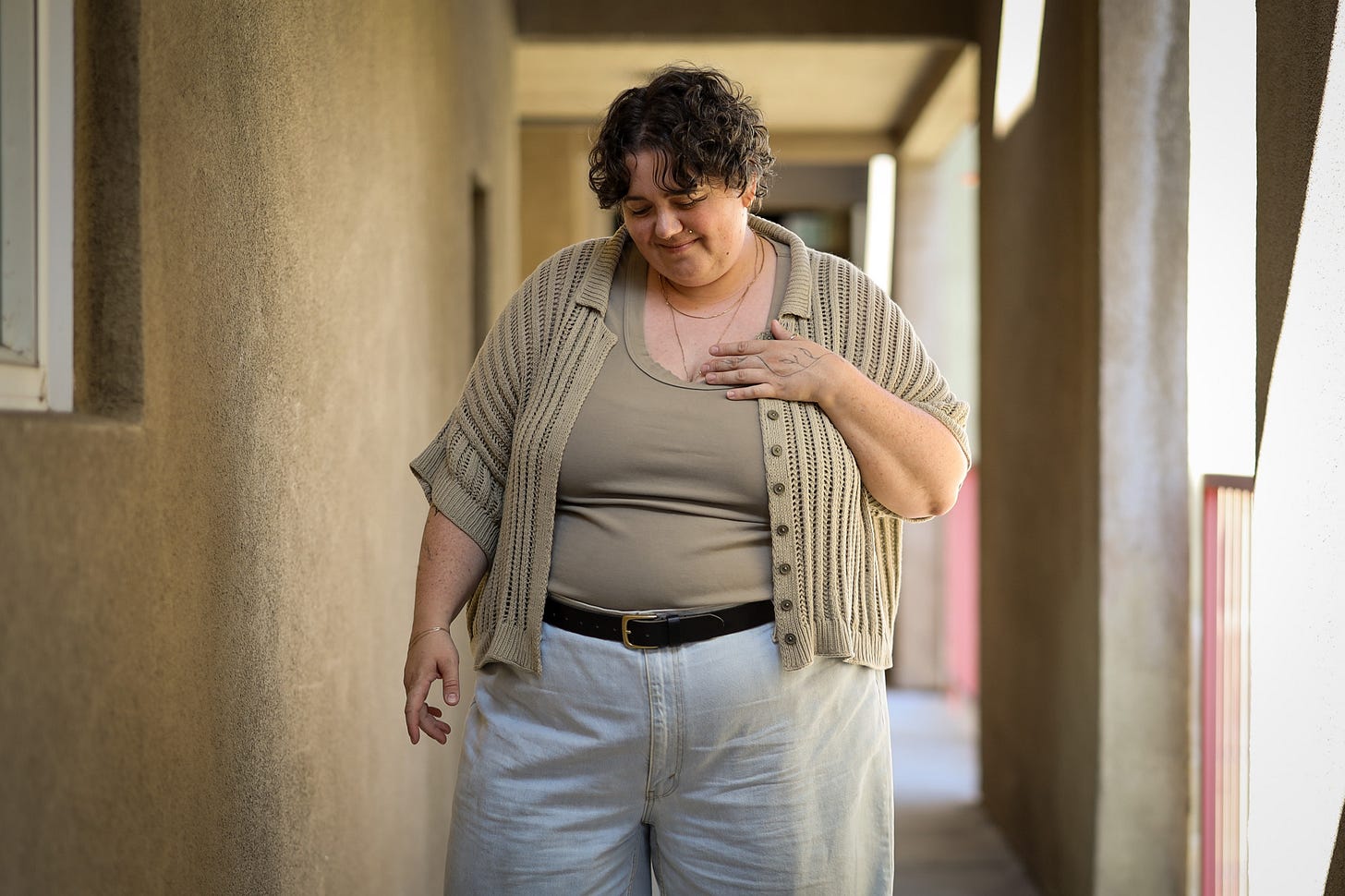
While this change has for sure ushered in an aesthetic shift in my work, I am perhaps more excited about the ways it has changed my pattern-writing and teaching. What does it mean to design clothes without making assumptions about the gender of the person who will be wearing them? How does it change the way I grade my patterns, the way I convey fit information in my instructions, or the way I market my work? When do I focus on educating people that may not understand the importance of gender neutral design and when do I focus on finding the people who already know and need this work but don’t yet know me?
I posted a reel on Instagram last week that offered an explanation of what I mean when I describe something as “gender neutral” in my patterns. I gave examples from two recent patterns: Sporti, which is my first pattern to offer two gender neutral fit types (wide and narrow shoulders), and Canyon, which is my first pattern to feature gender neutral bust/chest/belly darts.
When I published those patterns, I was relatively quiet about the work I’d done to de-gender them. This was partly because I was scared of getting it wrong while working through my own imposter syndrome as a not-yet-out genderqueer person, but it was also because I did not have the energy to be both experimenting with gender neutral pattern making AND marketing it at the same time. I was at capacity, in my personal life and in my creative work, just barely managing to find my footing in an exciting but also daunting new arena.
I am so excited now to feel grounded and able to share more about my process and the evolving project at the heart of my work: celebrating fat & queer bodies, lives, and art. It is my intention to continue evolving my offerings and sharing my experiments in patternmaking, artmaking, fashion, teaching, and community building.
Thank you, deeply, for being here and supporting me! I do not take it for granted, and I am so grateful.
